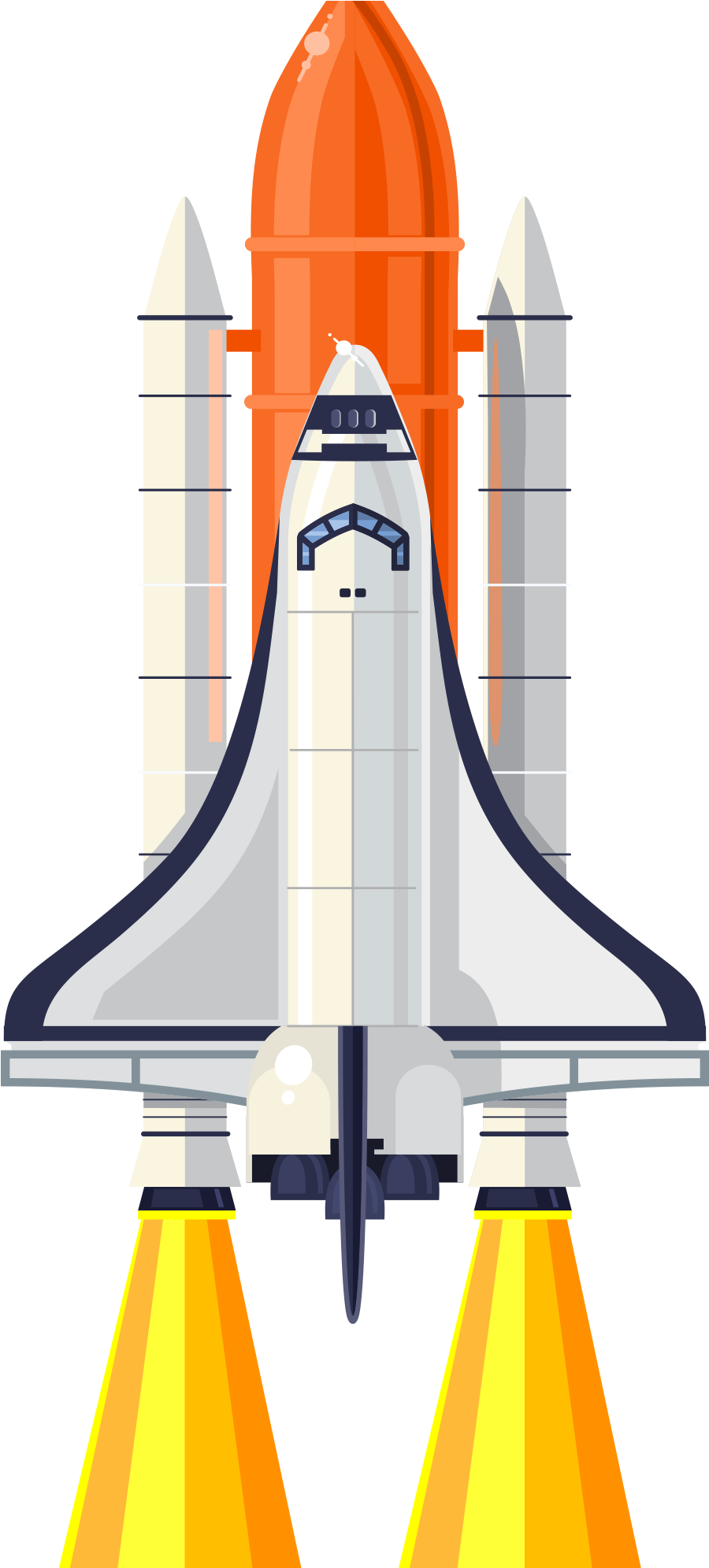
Rocket science is the study and application of physics and
engineering to design,
build, and launch vehicles that
travel through space.
Rocket science is the study and application of the principles involved in launching and propelling
rockets and spacecraft. It combines multiple disciplines, mainly aerospace engineering, physics,
and mathematics, and it’s often considered one of the most complex fields due to the extreme
environments and precision required.
● Newton's Third Law: “For every action, there is an equal and opposite reaction.” Rockets expel mass
(exhaust gases) in one direction to move in the opposite direction.
● Thrust: The force that propels a rocket upward, generated by the expulsion of exhaust gases from
the engine.
● Gravity & Drag: Rockets must overcome Earth’s gravity and air resistance to reach space.
● Propulsion Systems: Typically chemical rockets that burn fuel and oxidizer to create thrust.
These can be:
⋆ Liquid-fueled (e.g., SpaceX’s Falcon 9)
⋆ Solid-fueled (used in missiles and boosters)
⋆ Hybrid or even electric/ion propulsion (used for deep-space missions)
● Guidance and Control: Involves computers, gyroscopes, sensors, and algorithms that ensure the
rocket follows the intended path.
● Aerodynamics: Study of how air flows around the rocket; important during launch when passing
through the atmosphere.
● Structures and Materials: Rockets must be lightweight but extremely strong to withstand high
pressure, temperature, and acceleration forces.
● Siolkovsky Rocket Equation:
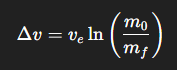
Where:
● Δv: change in velocity
● ve : exhaust velocity
● m0 : initial mass
● mf : final mass (after fuel is burned)
This tells us how much a rocket can accelerate based on how much mass it can shed as fuel.
● Weight vs. Fuel: More fuel means more weight, which in turn requires more fuel—a difficult trade-off.
● Extreme Conditions: Temperatures, pressures, and forces are intense; small errors can lead to mission failure.
● Precision: Orbital mechanics require very precise calculations and timing.
● Launching satellites
● Space exploration (e.g., Mars rovers, moon landings)
● Military defense systems
● Commercial space travel (e.g. HyperXion, SpaceX, Blue Origin)
Aerospace propulsion is the study and technology of generating thrust to move vehicles through
the atmosphere and into space. In aircraft, engines like turbojets, turbofans, and turboprops
draw in air from the atmosphere, compress it, mix it with fuel, and ignite it to produce thrust.
These are known as air-breathing engines and are efficient within the Earth’s atmosphere. For
spacecraft and rockets, propulsion relies on engines that carry both fuel and oxidizer, since
there’s no atmospheric oxygen in space. These include solid, liquid, and hybrid rockets. In both
air and space propulsion systems, principles from thermodynamics, fluid dynamics, and Newton’s
laws of motion govern how energy is converted into motion. Propulsion technologies vary depending on
the mission—whether it's lifting a satellite into orbit, cruising a passenger jet across continents,
or sending a spacecraft to Mars.
Aerospace propulsion also involves managing extreme conditions—like high temperatures, pressures,
and vibrations—requiring advanced materials such as titanium alloys, carbon composites, and ceramic
coatings. The field is continuously evolving with innovations in fuel types, propulsion cycles
(such as combined-cycle engines), and eco-friendly designs. There is also growing interest in
reusable propulsion systems, like the ones developed by SpaceX and Blue Origin, which aim to reduce
launch costs and increase flight frequency. As aerospace technology progresses, propulsion systems
are being designed not just for function, but for sustainability, efficiency, and adaptability in
increasingly complex missions—from hypersonic atmospheric flight to long-duration space travel.
The aerothermodynamics of gas turbine and rocket propulsion involves the study of how energy
is transferred and transformed within moving gases, specifically focusing on the thermodynamic,
fluid dynamic, and aerodynamic behavior of the working fluid—usually air or combustion
gases—inside engines. In gas turbines, commonly used in aircraft, air enters the engine at high
speed and is compressed by axial or centrifugal compressors, increasing its pressure and
temperature. The high-pressure air is then mixed with fuel and combusted, further raising its
temperature and energy content. The resulting hot gases expand rapidly and pass through a
turbine, which extracts some of the energy to drive the compressor, and the remaining energy is
used to produce thrust through a nozzle or to power a propeller. The aerothermodynamic analysis
here includes considerations like pressure ratios, temperature gradients, entropy changes, shock
waves at high speeds, and cooling techniques for turbine blades, which operate in extremely
high-temperature environments.
In rocket propulsion, aerothermodynamics becomes more focused on high-speed, compressible flow and
heat transfer in near-vacuum or high-altitude conditions. Unlike gas turbines, rockets carry both
fuel and oxidizer, so combustion can occur in space. The combustion chamber is where chemical
energy is rapidly converted into thermal energy, creating extremely high-pressure and
high-temperature gases. These gases are then accelerated through a converging-diverging nozzle
(usually a de Laval nozzle), expanding to supersonic speeds and generating thrust through momentum
exchange. Rocket engines operate under much more extreme conditions than gas turbines, often
exceeding temperatures of 3,000 Kelvin and requiring careful thermal management and nozzle design
to ensure structural integrity. The flow in rocket nozzles is analyzed using isentropic flow theory,
shock-expansion theory, and real-gas effects at high temperatures. Both systems rely heavily on
the principles of conservation of mass, momentum, and energy, but while gas turbines operate within
the atmosphere and are affected by external airflow, rockets function in controlled, sealed
environments where internal thermodynamics dominate. Understanding these aerothermodynamic processes
is critical for optimizing performance, efficiency, and safety in propulsion system design.
A liquid propellant rocket engine operates by burning liquid fuel and oxidizer to produce thrust.
These two propellants are stored separately in tanks and are either pushed into the combustion
chamber by high-pressure gas (in a pressure-fed system) or by turbopumps (in a pump-fed system).
Inside the combustion chamber, the propellants are mixed and ignited. The resulting high-pressure,
high-temperature gases are expelled through a specially shaped nozzle to produce thrust according
to Newton's third law.
The design of these engines involves careful attention to thermodynamics, fluid dynamics, and
materials science. Key challenges include achieving efficient combustion, managing extreme heat
through cooling systems (often regenerative cooling, where a propellant absorbs heat as it
circulates around the chamber), and ensuring stable operation without destructive vibrations or
oscillations.
Liquid propellants can be either bipropellant, which includes a separate fuel and oxidizer like
kerosene and liquid oxygen, or monopropellant, which involves a single chemical like hydrazine that
decomposes when catalyzed. Engine performance is often measured in terms of thrust and specific
impulse, which represents the efficiency of propellant usage.
Overall, liquid rocket engines are complex but highly controllable, making them ideal for both launch
vehicles and spacecraft maneuvering.
A liquid propellant rocket engine is like a controlled explosion harnessed with precision engineering,
transforming stored chemical energy into the raw power needed to escape Earth's gravity.
[ Engine Technology ]
The fundamental concepts of liquid-propellant rocket engines revolve around harnessing
chemical energy through controlled combustion to produce thrust. These engines work by
storing liquid fuel and oxidizer in separate tanks, which are then pumped or pressurized
into a combustion chamber where they are mixed and ignited. The resulting high-pressure,
high-temperature gases expand rapidly and are forced out through a nozzle, generating
thrust that propels the rocket forward.
A key principle in liquid-propellant rocket engines is Newton’s third law: for every action,
there is an equal and opposite reaction. The expulsion of gases at high velocity creates
the reactive force that lifts the rocket. One of the defining features of these engines is
their high performance, particularly in terms of specific impulse, which measures how efficiently
the engine uses propellant.
The engine’s design involves complex thermodynamics, fluid dynamics, and combustion chemistry.
The injector plays a critical role by ensuring proper atomization and mixing of the propellants,
which is vital for stable and efficient combustion. Cooling is another major concern, often managed
through regenerative cooling, where the fuel is circulated around the combustion chamber and nozzle
before injection, absorbing heat and preventing material failure.
Unlike solid rockets, liquid engines can be throttled, shut down, or restarted, giving them greater
flexibility and control. This makes them essential for precise maneuvers, orbital insertions, and
deep space missions. At the heart of their operation is a delicate balance of pressure, flow,
temperature, and structural integrity, all governed by rigorous engineering and physical principles.
Liquid rocket propulsion is a method of generating thrust by burning liquid fuel with a
liquid oxidizer in a combustion chamber to produce high-speed exhaust gases. These gases are
expelled through a nozzle, creating a reactive force that propels the rocket forward.
The system relies on storing propellants separately, typically at cryogenic or pressurized
conditions, and delivering them to the chamber via pumps or pressurization systems.
One of the defining characteristics of liquid rocket propulsion is its high degree of control.
Unlike solid rockets, liquid engines can be throttled, shut down, and restarted during flight,
making them ideal for missions requiring precise maneuvering, such as satellite placement or
interplanetary travel. The performance of a liquid rocket is largely measured by its specific
impulse, which indicates how efficiently it uses propellant to produce thrust.
The combustion process within the engine is extremely energetic, with temperatures often
exceeding 3,000 degrees Celsius, requiring advanced materials and cooling techniques to prevent
engine failure. Regenerative cooling is commonly used, where the fuel absorbs heat as it passes
through channels surrounding the combustion chamber and nozzle before being burned.
There are different cycles used to drive the turbopumps in liquid engines, such as gas-generator,
staged combustion, and expander cycles, each with trade-offs in complexity, efficiency, and
thrust capability. Overall, liquid rocket propulsion is a highly refined technology that combines
fluid mechanics, thermodynamics, and high-temperature material science to power everything from
launch vehicles to deep-space probes.
Liquid rocket propulsion is the art of turning volatile fluids into controlled fire and force,
crafting precision out of chaos to break the bounds of Earth.
Rocket and spacecraft propulsion is the science and engineering of moving vehicles through
space or Earth's atmosphere by expelling mass to generate thrust. In space, where there is
no air to push against, propulsion relies entirely on Newton’s third law—thrust is produced
by ejecting high-speed particles in the opposite direction of desired motion. Rockets
typically use chemical propulsion, either solid or liquid propellants, to provide the high
thrust needed for launch and orbital insertion.
Once in space, spacecraft often use more efficient propulsion systems such as ion thrusters,
Hall-effect thrusters, or chemical engines depending on mission needs. These systems prioritize
efficiency over raw power, especially for long-duration missions, since fuel mass is limited.
Spacecraft propulsion enables orbital maneuvers, trajectory corrections, and attitude control,
and is critical for interplanetary travel and satellite station-keeping.
Designing propulsion systems for space involves solving complex problems related to weight,
energy efficiency, thermal control, and vacuum operation. Unlike atmospheric flight, where
engines interact with air, space propulsion systems must function independently of external
mediums, demanding closed-loop, highly reliable mechanisms. Whether lifting off from a
launch pad or adjusting position millions of kilometers from Earth, propulsion remains the
heartbeat of every mission into the cosmos.
Rocket and spacecraft propulsion is the driving force behind humanity’s ability to escape
gravity and navigate the vastness of space. It transforms chemical or electrical energy into
pure motion by accelerating mass in the opposite direction, enabling travel where no
roads or air exist.
This field blends precision engineering with extreme environments, crafting engines that must
ignite with exact timing, endure searing temperatures, and function flawlessly in the silence
of the vacuum. Whether lifting a satellite into orbit or guiding a probe to another planet,
propulsion is what turns ambition into action.
Rocket propulsion has its roots in ancient inventions, beginning with simple gunpowder-filled
tubes used as military rockets in China around the 13th century. These early designs were
crude but laid the foundation for the principle of reactive motion—expelling mass to generate
thrust. Over centuries, the concept evolved slowly, driven more by curiosity
than practical application.
In the early 20th century, scientific pioneers like Konstantin Tsiolkovsky, Robert Goddard,
and Hermann Oberth transformed rocketry from speculative theory into a field grounded in
physics and engineering. Tsiolkovsky introduced the mathematical basis for space travel,
Goddard built and launched the first liquid-fueled rocket in 1926, and Oberth inspired a
generation with his writings on spaceflight. These developments marked a shift from
fireworks to serious scientific exploration.
By mid-century, rocket propulsion became central to global technological rivalry, especially
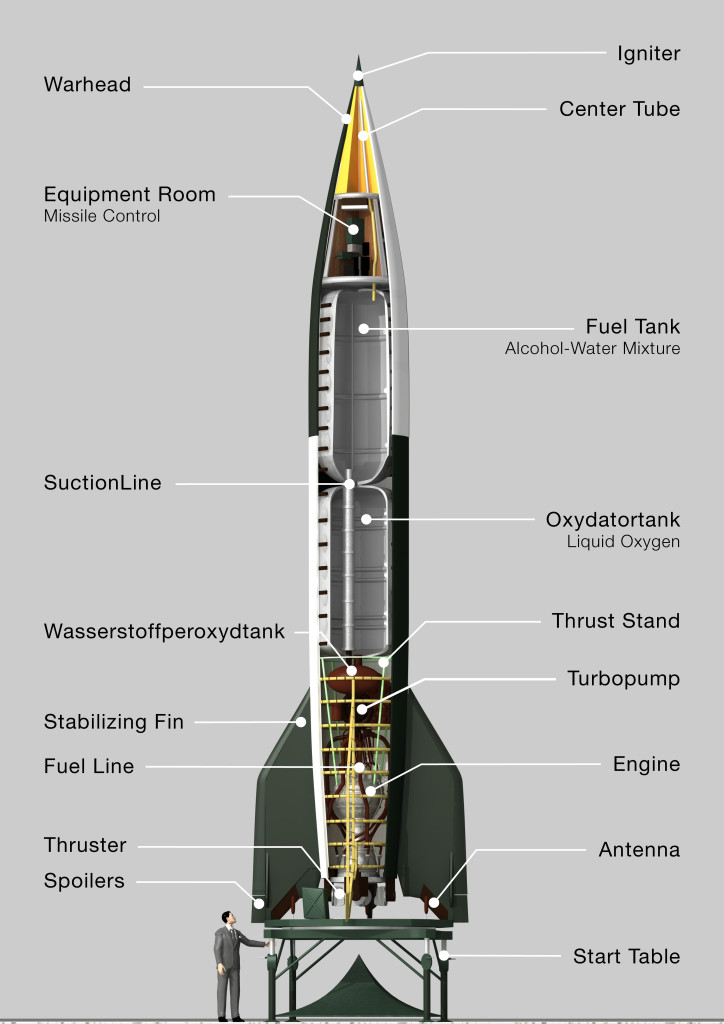
during World War II with the German V-2 rocket—the first long-range guided ballistic missile.
The Cold War further accelerated progress, leading to powerful launch vehicles like the
Saturn V, which took humans to the Moon. Throughout its history, rocket propulsion has
evolved from mystical flames to the precise and powerful engines that fuel
our exploration of space.
Rocket propulsion began as fiery arrows of warfare in ancient China, but over centuries, it
transformed into a symbol of scientific ambition and human exploration. What once roared
across battlefields now thunders into orbit, guided by the minds of visionaries
like Tsiolkovsky and Goddard.
From black powder to liquid fuel, and from unstable tubes to towering launch vehicles, the
evolution of rocket propulsion mirrors our journey from myth to mastery—an age-old dream
of reaching the stars, now driven by engines born of fire and precision.
Rocket propulsion, as presented in the general editions of Rocket Propulsion Elements, is
explored as a complex, multidisciplinary system that transforms stored chemical or
electrical energy into directed motion through the expulsion of mass. At its core,
it is an application of Newton’s third law, where force is generated by ejecting gases
at high velocity in the opposite direction of intended movement. The book lays out the
fundamental mechanics of how thrust is produced, how nozzles convert thermal energy
into kinetic energy, and how mass flow and exhaust velocity determine engine performance.
The general discussion emphasizes various propulsion types—chemical, liquid, solid, hybrid,
and electric—each governed by distinct physical and operational principles. Chemical
propulsion, for example, relies on rapid combustion of propellants to produce high-pressure
gases, while electric propulsion uses electromagnetic forces to accelerate ionized particles
to extreme speeds, trading thrust for high efficiency. Propulsion systems are analyzed not
just by their power output, but by how efficiently they use propellant, their cooling demands,
structural needs, and how they operate under vacuum or atmospheric pressure.
This treatment of rocket propulsion doesn't isolate equations—it links them to physical
phenomena such as shock waves in nozzles, cooling through regenerative methods, combustion
stability, and performance losses. Propulsion is revealed not as a single device, but as a chain
of interacting systems that must function in harmony, from the tanks and feed lines to the nozzle
exit, all under extreme thermal and pressure conditions. It is an orchestration of fluid dynamics,
thermodynamics, heat transfer, and control, designed not only to move a vehicle, but to do so with
precision, endurance, and reliability in some of the harshest environments known to engineering.
Rocket propulsion is the controlled release of intense energy to create motion, a system where
fire is shaped into force by precision-engineered machinery operating at the edge of physics.
It turns confined combustion into directional thrust, converting chemical bonds or charged
particles into forward momentum across airless space.
Each engine is a balancing act between pressure, heat, flow, and structure—where materials must
survive extremes, and every gram of propellant must deliver maximum push. In this orchestration
of forces, propulsion becomes not just movement, but the lifeline of space exploration itself.
A hybrid rocket is a type of propulsion system that combines elements of both solid and liquid
rockets, using a solid fuel and a liquid or gaseous oxidizer. The combustion occurs at the surface
of the solid fuel as the oxidizer flows over it, producing hot gases that are expelled through a
nozzle to generate thrust. This configuration offers a unique balance between safety,
controllability, and performance.
Because the fuel is solid and inert on its own, hybrid rockets are generally safer to store and
handle than fully liquid systems. The oxidizer flow can be throttled or shut off, giving them an
advantage over traditional solid rockets, which cannot be stopped once ignited. However, the
combustion process is more complex than it appears, involving turbulent mixing and heat transfer
at the fuel grain surface, which can affect performance consistency.
Hybrid rockets are often used in experimental, suborbital, or educational missions due to their
relatively simple design and reduced risk. They represent a middle ground in propulsion, offering
greater control than solids and less complexity than liquids, though they typically don’t match
either in performance extremes.
A hybrid rocket blends the raw simplicity of solid fuel with the flexible control of a liquid
oxidizer, creating a propulsion system that ignites only when both components meet in the
combustion chamber. It burns with precision yet remains inherently safer, offering a unique
compromise between the power of liquids and the stability of solids.
In this fusion of chemistry and control, the hybrid rocket breathes fire from two worlds—solid at
rest, liquid in motion—crafting reliable thrust with fewer risks and cleaner shutdowns, all
without sacrificing ambition.
Rocket science is really just about understanding how things move, especially when trying to get
something off Earth and into space. At the heart of it is a lot of physics — mostly how forces
work. One of the most important ideas is Newton's third law, which says that for every action,
there's an equal and opposite reaction. That’s actually how rockets move: they push gas out of
their engines really fast, and that pushes the rocket in the opposite direction.
Rockets start on the ground and have to fight against gravity. They burn fuel, which creates hot
gas, and that gas shoots out of the bottom to create something called thrust. The more fuel they
burn and the faster they throw that gas out, the more thrust they get, which helps them go up.
But rockets are heavy, and the higher they go, the more fuel they need. To help with this, most
rockets use something called staging. That means they’re built in parts, and as each part runs
out of fuel, it gets dropped off, so the rocket gets lighter and can go even faster.
When a rocket goes high enough and fast enough sideways — not just up — it doesn’t fall back down
like a ball would. That’s how it gets into orbit. It’s basically always falling, but because it’s
moving so fast sideways, it keeps missing the Earth. That’s what being in orbit means.
Even though it sounds complicated, you can learn the basics just by understanding how motion,
gravity, and engines work. There are some great videos, games, and simple books that explain
it in a fun way. And once you get how rockets move, it all starts to make sense — it’s just
one step at a time.
Rocket science, once you get past the beginner stage, starts to feel less like magic and more like a
very intense form of physics and engineering. At its core, it’s about controlling motion in a place
where there’s almost no air, using carefully managed energy. Rockets operate based on Newton’s laws,
sure — that’s the foundation — but you also begin to deal with the real challenges: optimizing thrust,
managing mass, and calculating trajectories in a constantly changing environment.
One of the most important ideas is the rocket equation. It shows the relationship between how much
fuel you carry and how fast you can go. But the tricky part is that as the rocket burns fuel, its
mass changes, and that affects everything — acceleration, efficiency, and even structural
integrity. That’s why staging is used. Each stage has its own engine and fuel, and when it's done,
it's dropped to reduce weight.
The engines themselves aren’t just fire-breathing tubes. They’re finely tuned machines that manage
pressure, temperature, and fuel flow with incredible precision. There are different types — liquid
engines that burn fuel and oxidizer with pumps and injectors, and solid boosters that just burn
like giant firecrackers. Each has trade-offs in terms of control, cost, and performance.
Once in space, it’s no longer about just going fast — it's about going fast in the right direction.
Navigation in space relies on orbital mechanics, which is a kind of dance with gravity. Getting
into orbit means going sideways fast enough that the planet curves away beneath you. Changing orbits
means changing velocity at precise moments, often using brief engine burns. These burns are
calculated using delta-v, which measures how much you can change your speed
with your available fuel.
There's also the challenge of dealing with real-world imperfections — things like atmospheric drag,
engine vibrations, thermal expansion, and even how fuel sloshes around in tanks during flight. So,
at this level, rocket science becomes a game of trade-offs: between power and weight, precision
and complexity, cost and reliability.
It’s still hard, but it’s not impossible. It just requires a strong grasp of physics, patience, and a
lot of problem-solving. It's really just applied physics, done with incredibly high stakes.
Rocket Manual for Amateurs is a fascinating little book that gives you a glimpse into how early hobbyists
and enthusiasts approached rocketry before it became the highly regulated, high-tech industry it is today.
Written in the 1960s by David Sleeter, it was meant for curious minds who wanted to build and launch
small rockets on their own, often from their backyard. It’s not just a set of instructions—it reflects a
time when experimentation, personal risk, and hands-on learning were central to how
people explored science.
The book walks you through how to build your own rocket engines, mix propellants, and design launch
systems using materials you could find at a hardware store. It dives into solid fuel chemistry, nozzle
design, and recovery systems, all explained in relatively simple terms, though it assumes a basic
understanding of chemistry and mechanics. What makes it so compelling is how practical it is—it’s not
just theory. The author talks about trial and error, safety issues, and real launches.
It’s also a window into a different era—before modern safety standards, before legal restrictions tightened
around amateur rocketry. Today, much of what’s in the book would be considered dangerous or even illegal
without proper permits. But as a historical artifact and learning tool, it still inspires. It shows how
curiosity and determination drove people to understand propulsion, build real flying machines, and push the
boundaries of what was possible outside of big institutions like NASA.
Reading it now, you don’t just learn about rockets—you feel the spirit of raw experimentation. You see how
science can be something you touch, test, and launch with your own hands. That makes Rocket Manual for
Amateurs not just a guide, but a kind of time capsule for the early space dreamers.